Cordless Impact Driver Drill FAQ
Welcome to our FAQ page! Here you’ll find answers to common questions about cordless impact driver drills, helping you understand their benefits, choose the right one, and use them effectively.
What is a Cordless Impact Driver Drill?
A cordless impact drill, also known as a cordless impact driver drill, is a power tool designed for driving screws and fasteners, especially into tough materials like wood, metal, and concrete. Unlike a standard drill, it incorporates a hammering mechanism that delivers concussive rotational blows directly to the fastener. This impact action significantly increases torque and makes driving long screws or working with dense materials much easier and faster.
What’s the difference between a Cordless Drill and a Cordless Impact Drill?
While both are battery-powered drilling tools, the key difference lies in their mechanism and primary function:
* Cordless Drill (or Hammer Drill): Primarily designed for drilling holes in various materials. A hammer drill setting adds a percussive, out-of-line hammering action that can be used for drilling into masonry.
* Cordless Impact Drill (or Impact Driver Drill): Primarily designed for driving screws and fasteners. It uses a rotational impact mechanism that delivers high torque and is very effective for driving long screws, lag bolts, and bolts into hard materials. It’s generally *not* ideal for precise drilling of small holes as the high torque can overtighten or strip screws.
When should I use a Cordless Impact Drill?
You should consider using a cordless impact driver drill when you need to:
* Drive long and large screws: Especially in wood, where a standard drill might struggle.
* Work with dense materials: Like hardwoods or even certain types of metal.
* Assemble furniture or structures: Where repetitive screwing is involved.
* Fasten lag bolts or large bolts: These require significant torque that an impact drill excels at.
* Minimize user fatigue: The impact action does most of the work, reducing arm strain.
* Avoid stripping screws: The controlled bursts of torque can prevent cam-out (the driver bit slipping out of the screw head).
When should I *not* use a Cordless Impact Driver Drill?
* Precision drilling: For small, delicate holes where over-torquing could damage the material.
* Drilling into soft materials where over-tightening is a risk: Like soft woods or certain plastics.
* Driving very small screws: The high torque can easily snap or strip these.
* Counter-sinking: While possible, it’s harder to control with the impact action.
What are the key features to look for in a Cordless Impact Driver Drill?
* Torque (Newton-meters or ft-lbs): This is the most crucial spec, indicating the rotational force. Higher torque is better for tough jobs.
* RPMs (Revolutions Per Minute): Higher RPMs generally mean faster driving. Look for variable speed control.
* Battery Voltage (Volts): Higher voltage (e.g., 18V, 20V) usually means more power and longer run-time.
* Battery Type and Capacity (Amp-hours – Ah): Lithium-ion batteries are standard. Higher Ah means longer working time per charge.
* Chuck Type: Most impact drivers use a 1/4-inch hex collet for quick bit changes.
* LED Work Light: Essential for illuminating dimly lit work areas.
* Variable Speed Trigger: Allows for finer control over speed.
* Forward/Reverse Switch: Standard for driving and removing fasteners.
* Ergonomics and Weight: How comfortable is the tool to hold and maneuver?
* Brushless Motor: Offers more power, efficiency, and longer tool life compared to brushed motors.
What is the difference between a 12V and 18V/20V impact drill?
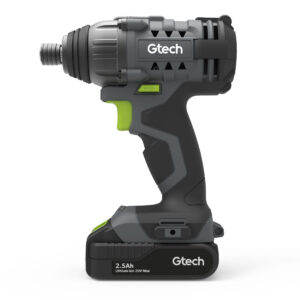 * 12V Impact Drills: Generally smaller, lighter, and less powerful. Best suited for lighter-duty tasks like furniture assembly, driving smaller screws, and occasional DIY projects. They are more compact and easier to maneouver in tight spaces.
* 18V/20V Impact Drills: Offer significantly more power, torque, and longer run-time. They are the workhorses for most DIYers and professionals, capable of handling larger fasteners, tougher materials, and more demanding tasks. (Note: 20V MAX tools are technically 18V nominal voltage). Check out GTech Drill set that includes bits
What kind of bits do I need for an impact driver drill?
Impact driver drills use 1/4-inch hex shank bits. It’s highly recommended to use impact-rated bits. These bits are specifically designed to withstand the rotational impacts and are made from tougher, more durable materials. Using standard drill bits can lead to premature wear, breakage, and potential injury.
How do impact bits work differently from regular drill bits?
Impact bits have a specialised design and manufacturing process to handle the high torque and shock of impact tools. They typically have:
* Torsion zones: Flexible sections of the bit that absorb the shock and prevent breakage.
* Durable materials: Made from hardened steel alloys.
* Precision-machined tips: For a secure fit and to prevent stripping.
Can I use an impact driver drill for drilling holes?
While some impact driver drills *can* drill holes, it’s generally not recommended as their primary function. The impact mechanism is designed for delivering rotational blows to fasteners, not for creating a clean hole. It can be difficult to control, and you risk damaging or enlarging the hole, especially in softer materials. If you need to drill holes, a standard drill or a hammer drill is usually a better choice.
How do I maintain my cordless impact driver drill?
* Keep it clean: Wipe down the tool after each use to remove dust and debris.
* Store batteries properly: Store them in a cool, dry place and avoid extreme temperatures.
* Charge batteries as needed: Don’t let them sit discharged for extended periods.
* Check for wear and tear: Inspect bits and chuck regularly.
* Refer to the manufacturer’s manual: For specific maintenance instructions.
What are the common problems and troubleshooting tips?
* Weak power:
* Check battery charge.
* Ensure the correct bit is fully inserted.
* Clean the chuck.
* The tool might be overloaded for the task.
* Stripping screws:
* Ensure you’re using the correct size and type of driver bit.
* Use lower speed settings for better control.
* Apply appropriate pressure.
* Consider using impact-rated screwdriving bits.
* Tool not starting:
* Check battery connection.
* Ensure the forward/reverse switch is not stuck in the middle position.
* Consult the manual for troubleshooting error codes.
What is a “detent pin” or “friction ring” in the chuck?
This refers to the way the bit is held in the chuck of an impact driver drill.
* Detent Pin (or Ball Bearing): The bit snaps into place with a small pin or ball bearing that secures it. This is very quick for bit changes.
* Friction Ring: The bit is held in place by a spring-loaded friction ring. You still need to pull the collar forward to insert or remove the bit, but it’s generally a secure fit.
Both are designed for quick bit changes, which is a hallmark of impact drivers.
We hope this FAQ has answered your questions about cordless impact drills! If you have any further inquiries, please consult your tool’s manual or contact the manufacturer.
