Jump Starter FAQs: Get Back on the Road in No Time!
This FAQ page will answer your most common questions about jump starters, their usage, and how to choose the right one for your needs.
What is a Jump Starter?
A jump starter, also known as a portable jump box, car battery booster or a battery box, is a compact, portable device that provides enough electrical power to start a car with a dead battery. Unlike traditional jumper cables that require another vehicle, a jump starter is a self-contained unit.
How Does a Jump Starter Work?
A car battery box starter contains a high-capacity battery (typically lithium-ion or lead-acid). When connected to your car’s dead battery (positive to positive, negative to negative), it delivers a surge of power to crank the engine, bypassing the need for a working car battery.
Why Should I Use a Jump Starter Instead of Jumper Cables?
- Independence: You don’t need to rely on another car or a stranger’s help.
- Convenience: Easy to use and store in your car.
- Safety: Many modern starters have built-in safety features to prevent short circuits, reverse polarity, and overcharging.
- Versatility: Many jump battery starters also function as power banks for charging other electronic devices.
What’s the Difference Between Lithium-ion and Lead-Acid Battery Box Starters?
* Lithium-ion: Lighter, smaller, more compact, hold a charge longer, can be recharged more times, and typically have more starting amps for their size. They are generally more expensive.
* Lead-Acid: Heavier, bulkier, require more frequent charging, and have a shorter lifespan. However, they are often more affordable.
What are “Starting Amps” and “Peak Amps”?
* Starting Amps (CCA – Cold Cranking Amps): This refers to the power the starter can deliver consistently to crank your engine, especially in cold weather. A higher CCA rating is generally better.
* Peak Amps: This is the maximum surge of power the jump starter can deliver for a very short duration. While important, CCA is often a more reliable indicator of its ability to start your car consistently.
How Many Starting Amps Do I Need?
The recommended starting amps depend on your vehicle’s engine size and type:
- Small Cars (4-cylinder): 200-300 CCA is usually sufficient.
- Medium Cars (6-cylinder): 300-400 CCA is good.
- Large Cars, SUVs, and Trucks (V8+ petrol, diesel): 400+ CCA, and potentially higher for diesel engines which require more power.
Always check your vehicle’s owner’s manual for specific recommendations.
How Do I Use a Battery Box?
The process is generally similar for most models, but always refer to your starter’s manual for specific instructions:
1. Ensure the jump starter is fully charged.
2. Turn off the ignition and all accessories in your car.
3. Connect the red (positive) clamp to the positive (+) terminal of your car’s dead battery.
4. Connect the black (negative) clamp to the negative (-) terminal of your car’s dead battery OR to an unpainted metal surface of the engine block or chassis, away from the battery. This is a safety measure to prevent sparks near the battery.
5. Turn on the battery box.
6. Attempt to start your car. If it doesn’t start immediately, wait a minute or two and try again. Do not crank for more than 10-15 seconds at a time.
7. Once the car starts, let it run for at least 15-20 minutes to allow the alternator to recharge the battery.
8. Turn off the jump starter.
9. Disconnect the black (negative) clamp first, then the red (positive) clamp.
10. Store the jump starter in a safe place.
Do I Need to Charge My Jump Starter Frequently?
Yes. Lithium-ion starters can hold their charge for several months, but it’s still recommended to charge them every 3-6 months, or whenever the battery level indicator shows a significant drop. Lead-acid jump starters may need more frequent charging. Always keep it charged, especially before long trips.
Can I Use a Jump Starter to Jump-Start a Motorcycle or Boat?
Yes, many jump starters are versatile enough to start motorcycles, boats, and other vehicles with batteries. Ensure the jump battery starter’s CCA rating is compatible with the engine size.
What Safety Features Should I Look For in a Jump Starter?
- Reverse Polarity Protection: Prevents damage if clamps are connected incorrectly.
- Short Circuit Protection: Prevents damage from accidental contact between clamps.
- Overcharge Protection: Prevents damage to the jump starter’s battery.
- Spark-Proof Technology: Minimises the risk of sparks when connecting.
- Over-Temperature Protection: Shuts down the device if it overheats.
Can a Jump Battery Starter Damage My Car Battery?
When used correctly according to the instructions, a reputable starter should not damage your car battery. However, improper connections or using a starter with insufficient power for your vehicle could potentially cause issues.
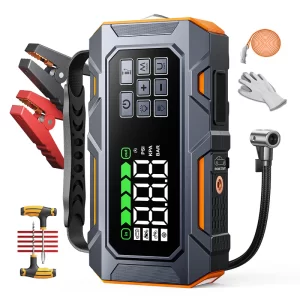 What Else Can Jump Starters Be Used For?
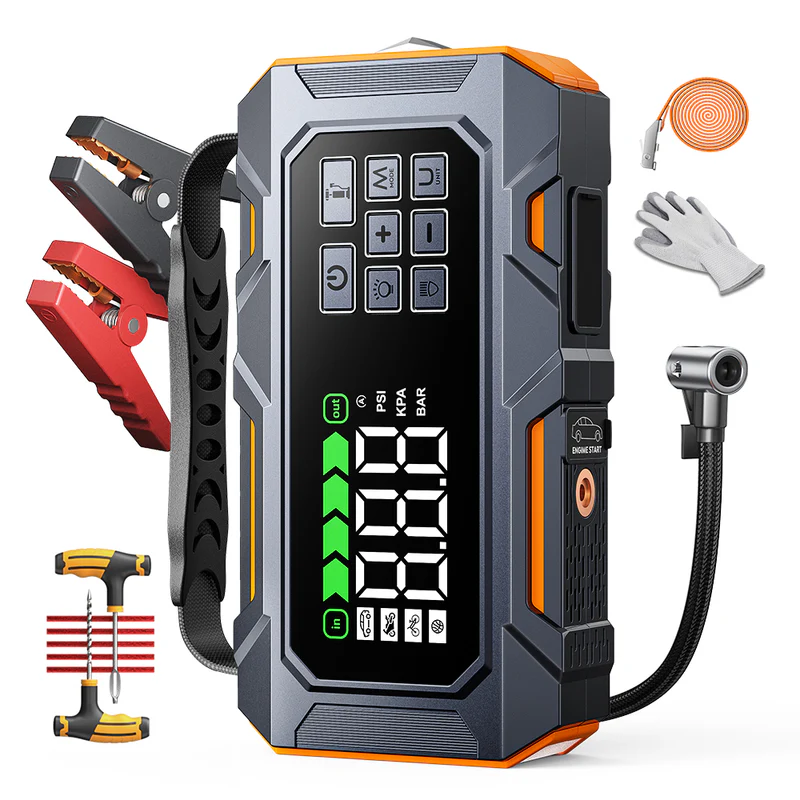
Most modern jump starters include additional features:
- Power Bank: Charge smartphones, tablets, laptops, and other USB-powered devices.
- Air Compressor: Inflate car tyres, bike tyres, footballs and other equipment that needs a pump
- LED Flashlight: Useful for signaling, working in the dark, or emergencies.
- Emergency Light: Some have strobe or SOS functions.
How Long Does a Jump Starter Take to Recharge?
Recharge times vary by model and capacity. A typical lithium-ion starter can take anywhere from 3 to 8 hours to fully recharge from a wall outlet or car charger.
Can I Use a Jump Starter in Very Cold Weather?
Lithium-ion jump battery starters generally perform better in cold weather than lead-acid ones. However, extreme cold can still reduce their performance. It’s best to keep your device in a temperature-controlled environment (like your car’s cabin) if possible when expecting very cold conditions.
Where Should I Store My Jump Starter?
Store your battery box starter in a cool, dry place, away from direct sunlight and extreme temperatures. A glove compartment, under a seat, or in a designated car emergency kit are good options.
When Should I Consider Replacing My Jump Starter?
- If it no longer holds a charge for a reasonable amount of time.
- If it struggles to start your car, even with a full charge.
- If the battery indicators are consistently showing low levels.
- If there are any physical signs of damage.
Are There Any Legal Restrictions on Jump Starters?
Generally, there are no legal restrictions on owning or using battery starters for personal vehicles. However, always be aware of local regulations regarding battery disposal.
We hope this FAQ has answered your questions about jump starters. If you have any further inquiries, consult your jump starter’s user manual or contact the manufacturer. Stay prepared for any roadside emergencies!
